Did you know that research in the field of positive psychology indicates that your level of happiness is at least 40 percent dependent on intentional activities within your control? With practice, you can significantly improve your overall happiness, even if your natural state is one of pessimism. You can work towards maximum stability and happiness in your life by practicing gratitude and the Stoic Art of Living.
Positive psychology focuses on the wellness and happiness aspects of mental health, rather than on mental illness alone. According to Dr. Robert Emmon's book, How Practicing Gratitude Can Make You Happier, psychological research shows that your “happiness quotient,” is about 50 percent dependent on a genetic set-point that you are born with. Some people are naturally more optimistic than others as a result of their set-point. An additional 10 percent of your happiness quotient is determined by external factors and circumstances in your life.
However, the other 40 percent of your happiness quotient is completely within your control, regardless of your genetic set point or external factors. Intentional happiness practices include taking time to count your blessings, displaying positive character traits such as friendliness and kindness, focusing on the present moment, and by keeping a daily gratitude journal where you express joy for all of the good things that happened to you that day.
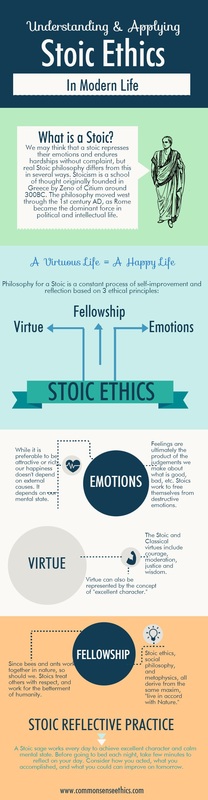
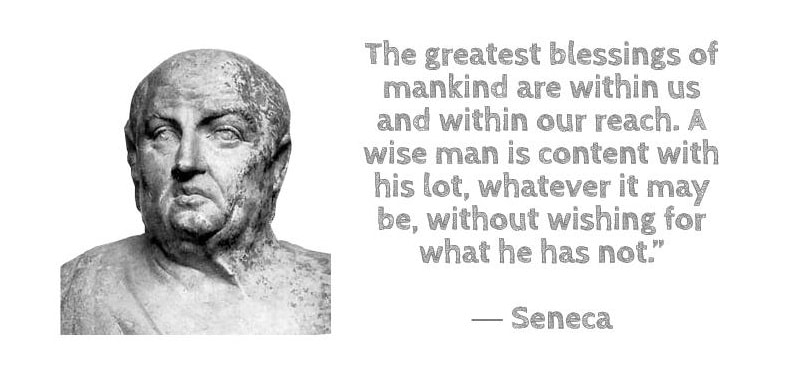
Interestingly, this is not new information. The Stoic School of philosophy advocated a very similar perspective beginning 2400 years ago in ancient Greece. Many Stoic philosophers, including Zeno, Seneca, Epictetus, and Marcus Aurelius, developed a practical philosophy for increasing happiness and virtue, which they called The Art of Living.
Stoicism is way of life involving constant practice and introspective training, not just a set of philosophical beliefs. Stoics try to live happily and gratefully, regardless of external good fortune. They also aim to take control of their own inner natures, to know themselves, and to root out their destructive emotions in the pursuit of virtue, using a process of introspection or spiritual exercises loosely refered to as Stoic reflective practice.
Positive psychology focuses on the wellness and happiness aspects of mental health, rather than on mental illness alone. According to Dr. Robert Emmon's book, How Practicing Gratitude Can Make You Happier, psychological research shows that your “happiness quotient,” is about 50 percent dependent on a genetic set-point that you are born with. Some people are naturally more optimistic than others as a result of their set-point. An additional 10 percent of your happiness quotient is determined by external factors and circumstances in your life.
However, the other 40 percent of your happiness quotient is completely within your control, regardless of your genetic set point or external factors. Intentional happiness practices include taking time to count your blessings, displaying positive character traits such as friendliness and kindness, focusing on the present moment, and by keeping a daily gratitude journal where you express joy for all of the good things that happened to you that day.
Interestingly, this is not new information. The Stoic School of philosophy advocated a very similar perspective beginning 2400 years ago in ancient Greece. Many Stoic philosophers, including Zeno, Seneca, Epictetus, and Marcus Aurelius, developed a practical philosophy for increasing happiness and virtue, which they called The Art of Living.
Stoicism is way of life involving constant practice and introspective training, not just a set of philosophical beliefs. Stoics try to live happily and gratefully, regardless of external good fortune. They also aim to take control of their own inner natures, to know themselves, and to root out their destructive emotions in the pursuit of virtue, using a process of introspection or spiritual exercises loosely refered to as Stoic reflective practice.