
Common Sense Ethics
  • Blog
  • About
  • My Books
  • Parenting Resources
  • Personal Growth Resources
  • Book Summaries
  • Contact Me

Fearless Parent: How to Raise Kids Using Stoic Philosophy

8/12/2018

2 Comments

 
Wondering how to be less stressed as a parent? Stoicism is an ancient Greek philosophy that teaches us how to focus on what we can control in life. Brittany Polat of Apparent Stoic and I discuss how to apply Stoic philosophy to parenting, and how it can make both parents and kids happier.

We discuss:
  • Overcoming worry and parenting anxiety. Not worrying about what other people think of how you raise your children.
  • US culture being oriented towards adult lifestyles and careers and not very child friendly.
  • Thinking that you can control everything and being goal oriented does not work with kids because while you can influence them, you can't control what they do.
  • You will be happier as a parent/family if you focus on what you can control - the environment, how you respond, getting prepared in advance, etc.
  • The Golden Rule and other ways to teach kids the value of kindness. ​
2 Comments

Creating Your Ideal Family Culture

12/19/2017

0 Comments

 
Picture
With the holidays coming up, many of us are focused on family. My recent post Why You Should Create Your Own Culture to Be Happier prompted a discussion on the Stoic Parents Facebook group about how to create a family culture. Family culture, (defined as the way that a group of people think, feel, act and achieve common goals) is tremendously influential. Creating an ideal culture for your family is something that must be done intentionally. Otherwise you will probably operate in default mode just trying to get things done each day since life with kids tends to be busy: 

"Parents must decide what quality of family life they will have and then use the necessary discipline to accomplish this. Otherwise life will push the family in diverse directions...Those parents who have carefully examined their values and their view of life are going to be those whose influence on their children is most consistent. Why? Because what they believe is important to them...Our priorities are determined by our values." - Gladys Hunt, Honey for a Child's Heart.

You don't get a second chance at raising your children. Brainstorm what you ideally want for your family life, write it down, and then be disciplined enough to implement it. Build the various aspects of your ideal family culture into your routine and they will come naturally. It may help to think about your ideal family culture in terms of these four broad categories: 
​​

Read More
0 Comments

Why You Should Create Your Own Culture to Be Happier

10/23/2017

5 Comments

 
Picture
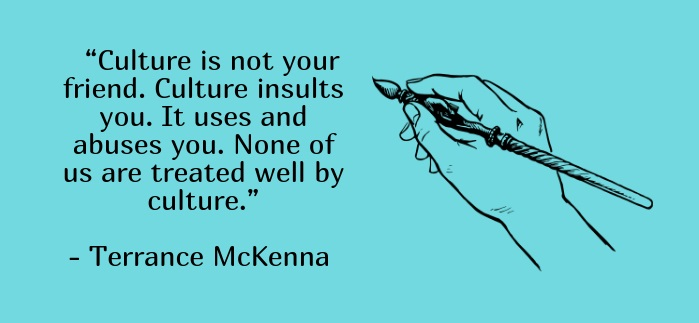
It’s easy to feel overwhelmed by the nonsense bombarding us daily. Sometimes I think that mainstream American culture leaves a lot to be desired. Whenever I get disgusted, I'm reminded of Terrance McKenna's instructions:

“Culture is not your friend. Culture is for other people’s convenience and the convenience of various institutions, churches, companies, tax collection schemes, what have you. Culture insults you. It uses and abuses you. None of us are treated well by culture...
We have to create culture, don’t watch TV, don’t read magazines, don’t even listen to NPR. Create your own roadshow.”  

McKenna is saying that if you don't consciously build your own meaningful culture in your life, it will be determined for you by dominant personalities, media, propaganda, peers, advertising, and all kinds of other capricious influences who have no business being in your head and determining your preferences and actions. 

Life is short, and progress towards virtue is often time consuming and hard won. You should be very selective about what you devote your precious and limited time to. If you want to be happier, cut out expressions of culture that sabotage your happiness and personal growth, and deliberately
 create your own personal culture of beauty and meaning based on your values, rather than on other peoples'.
​

Read More
5 Comments

The Social Justice Warrior Paradox

9/3/2016

11 Comments

 
Picture
Do we have an obligation to be good, community minded citizens and to act accordingly? The simple answer is yes, but the full answer is more complicated, so please bear with me for a second.

I received some mildly critical feedback on my most recent post: 4 Pieces of Stoic Wisdom For Dealing With Negative News Media. (Nothing too harsh of course - this blog has polite readers!) The objections are with my suggestion that we should tune out news media entirely or almost entirely if we want equanimity. Those who commented, argued that Stoics (and presumably non-Stoics) have a duty to act socially and politically, and that ignoring the news smacks of self-interested isolation in the Epicurean Garden.

So, what is the problem with staying informed via news media, you ask? Isn't that what we are supposed to do in a democracy? There are two parts to this question which warrant a response. First, there is the problem of social and political action, ostensibly based on the information we get via media. In other words, what should we "do about," current issues? Second, there is the problem of the information itself - with the quality and manipulation of news and mass media - which I will go on to address in part 3 of this series.

Do social and political actions really have any effect? Can taking such actions be harmful? Do we have a duty to stay informed? Well yes...and no. It all boils down to the question of what do you plan on doing with the information you get from the news. There are certainly more and less ethical and effective ways to create a better community and a better world, so I have also included some helpful suggestions at the end of the post: 


Read More
11 Comments

4 Pieces of Stoic Wisdom For Dealing With Negative News Media

8/24/2016

4 Comments

 
Picture
News headlines, predominantly negative and sensational, dominate our lives. We are barraged with news information 24/7 through our smart phones, social media, TV, websites, papers, and magazines. What is the consumption of news media doing to our brain and our outlook on life? Should we choose to avoid the news altogether?

It’s is not a new question to be asking. 2000 years ago, the Roman Stoic philosopher Musonius Rufus questioned the effects that negative forms of socialization have in our lives. We, as philosophers, should not worry about the things that most people do as a result of their constant consumption of news media.

“How could we acquire courage if we had merely learned that the things which seem dreadful to the average person are not to be feared, but had no experience in showing courage in the face of such things?” he asks.

You too can exercise the Stoics' ancient brand of philosophical wisdom and not get upset about events in the news. Terrorism? A shooting? Crisis? Corrupt Politicians? Freedom from these concerns can be yours via these 4 important realizations:


Read More
4 Comments

Solomon Kane: Must See Fantasy Flick About the Surprising Paradox of Nonviolence

2/19/2016

10 Comments

 
Picture

While doing research for this post, I came across the unusual phrase "A lasting peace, through the judicious use of the spear." This phrase perfectly sums up the salient moral message in Solomon Kane, an independent Sword and Sorcery film about a Puritan vigilante sworn to fight evil in 16th Century England.
​ 
Far from being another film full of gratuitous violence, Solomon Kane explores a rather profound ethical question: when does adherence to nonviolence trump the moral and personal obligation to protect your life, or the lives of your family, from immanent harm? 

Solomon Kane 
offers an unexpected axiom on the paradox of nonviolent philosophy. Pacifism is undoubtedly a philosophy arising from a selfless desire to not harm others. Pacifists view all violence as a moral failing. But paradoxically, the failure to protect others from immanent rape, murder, etc, when in a position to do so, leads to them being harmed. Under certain circumstances, nonviolence is actually a selfish philosophy, rather than a selfless philosophy.

In a world where evil people rape and murder, forceful opposition to violence is not only pragmatic, it necessary and moral. The most pragmatic and ethical position is nonaggression, rather than nonviolence.


Read More
10 Comments

Are You Suffering From Negative Socialization?

1/5/2016

1 Comment

 
Picture
Since antiquity, inquiring minds have been calling into question the effects of being socialized into conformity with dominant cultural ideas or peer groups. Agents of socialization, both negative and positive, often include family, schools, peers, culture, media, and religion. 

According to the Roman Stoic philosopher Musonius Rufus, humans are innately virtuous, but our nature is degraded from childhood by negative socialization.
The dominant political and social environment is corrupting to the soul. Bad habits, unconsidered social norms, and negative views of "reality," that we pick up as we go through life, often impede our personal development.

By the time we reach adulthood, we all have accumulated beliefs that our culture imposes on us, including our views on money, pleasure, leisure, and entertainment. We may view minor inconveniences as a hardship, and fear things that are beyond our control. Even if our parents don't model this behavior, peers, the media, and the the culture at large often do.
Living in society handicaps us in this regard.

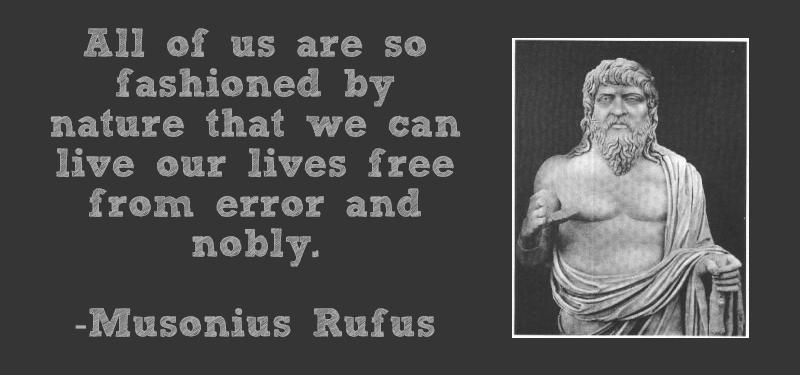
Fortunately, developing a philosophical outlook can correct the effects of negative socialization. Musonius argued that “All of us are so fashioned by nature that we can live our lives free from error and nobly.” [1]


Read More
1 Comment

7 Behaviors That Lead To Lasting Happiness

4/10/2014

6 Comments

 
Picture
Recently I was posting on a debate forum that I frequent, when another poster asked me if I read Spanish. (I don’t but I’m working on reading Latin). The person’s question really hit home for me, because I realized that by spending time posting on a forum, I was neglecting goals that are more important to me, like learning Latin.

We all do trivial things which take up our time unnecessarily, deplete our energy, steal our focus, or detract from our relationships with loved ones. Wasting time is just one of many behaviors that lead to unhappiness in the long run, when we fail to achieve our goals, or regret the things that we didn’t do. Instead, we should be cultivating these 7 intentional behaviors, which contribute to lasting happiness:


1. Learn From Your Mistakes

Failures and mistakes are ok, as long as you learn from them. You fell in love with the wrong person? It happens. You failed to achieve an important goal? Everyone who succeeds fails first. You made the wrong choice regarding an important decision? At least you came away from the experience more knowledgeable than when you started.

Don’t be afraid of making mistakes. Be afraid of repeating the same mistakes over and over again. When you make a mistake or something goes wrong in your life, ask yourself, what can I learn from this? What does this situation have to teach me?


Read More
6 Comments

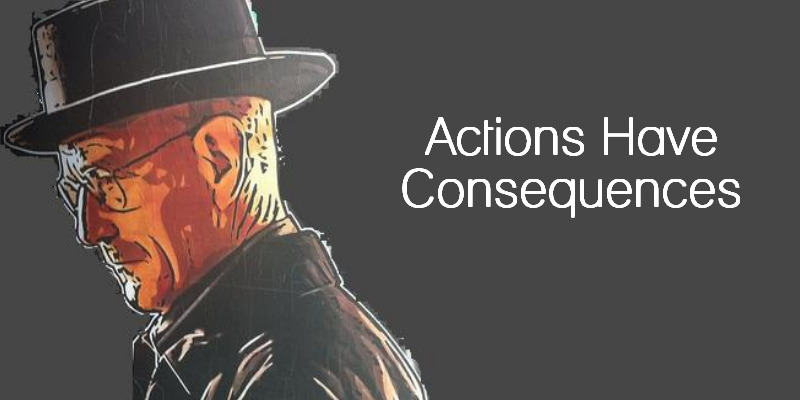
Breaking Bad's Secret Message: Actions Have Consequences 

12/5/2013

4 Comments

 
Picture
Most people watch television to be entertained. AMC’s popular series Breaking Bad, is a rare show which entertains and does something infinity more important; it examines serious moral issues in grave detail. Vince Gilligan, the creator of the show, stated, “If there’s a larger lesson to Breaking Bad, it's that actions have consequences.”

The actions in question often relate to the downward spiral of the show’s anti-hero, Walter White, who after a cancer diagnosis, goes from ordinary high school chemistry teacher to brilliant and violent meth kingpin. While overtly a modern Western about science, drugs, and criminality, Breaking Bad is secretly a moral treatise.

Widely touted as one of the best television series of all time, Breaking Bad concluded in September 2013. The show has also been criticized for its grittiness, cynicism and lack of humanity. There may be certain times when viewers will inevitably feel cynical because the show accurately portrays human failings, consequences and the tendency for self deceit. All moral choices are human, but some are just not pro-humanity. The show's deeper purpose is to realistically explore overarching themes of moral choice, personal conduct, responsibility, self-deception, and karma.

Note: if you have not seen the entire series, there are spoilers below.


Read More
4 Comments
Forward>>

    Don't Miss A Post!

    Sign up to receive updates and special announcements!

    Thank You For Subscribing to Common Sense Ethics!

    You have successfully joined my email list. 

    .
    Picture

    About Me:

    Thank you for your interest in Common Sense Ethics! I'm Leah, a librarian and author with a background in history and philosophy.
    ​

    Most Popular Blog Posts:

    3 Unpopular (But Likely Correct) Opinions According to Cicero

    Beauty in Philosophy, Ethics and Art: A Conversation with David Fideler

    5 Ways to Counterbalance an Ugly and Barren Cultural Landscape

    How Propaganda Makes us Psychologically Totalitarian

    5 Things That You Need to be Happy According to Cicero

    5 Wholesome Character Education Books to Read to Your Child

    Why is Politics so Divisive?

    9 Great Critical Thinking Books for Children and Teens

    Why You Should Create Your Own Culture to Be Happier

    How to Make Yourself Immune to Propaganda

    ​The 10 Best Philosophy Books For Beginners

    The 13 Types of Modern Stoics...Which One Are You?

    How to be a Badass According to Cicero

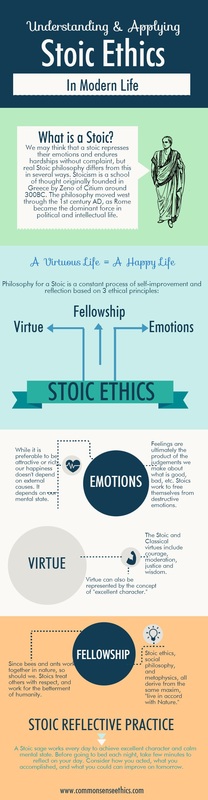
    Quick Guide: Understanding and Applying Stoic Ethics in Modern Life

    Download My Stoic Printables For Tough Days:

    Picture

    Watch Common Sense Ethics On YouTube:


    Support CSE:

    Picture
    Picture
    Buy Me a Coffee at ko-fi.com


    Topics:

    All
    According To Cicero Series
    Aesthetics
    AI Ethics
    Alasdair Macintyre
    Albert Einstein
    American Revolution
    Ancient Greece
    Ancient Rome
    Anger
    Antiauthoritarianism
    Applied Philosophy
    Aristotle
    Assertiveness
    Beauty
    Book Reviews
    Books And Reading
    Buddhism
    Carl Jung
    Cause And Effect
    Character Flaws
    Christianity
    Cicero
    Classical Education
    Cognitive Bias
    Consequence Based Ethics
    Consumerism
    Cosmology
    Covert Manipulation
    Critical Thinking
    Culture
    Cynicism
    Death
    Descartes
    Destructive Behavior
    Economics
    Edmund Burke
    Education
    Egalitarianism
    Emotions
    Environmentalism
    Epictetus
    Ethical Objectivism
    Family
    Fortitude
    Francis-bacon
    Freedom
    Freedom Of Speech
    Free Speech
    George-r-r-martin
    George-r-r-martin
    God
    Golden Rule
    Good Character
    Government
    Gratitude
    Grief
    Happiness
    Heraclitus
    History
    Immanuel Kant
    Individual Rights
    Information Literacy
    Inner Life
    Integrity
    Introspection
    Intuition
    Iron Law Of Oligarchy
    Jaques Ellul
    John Locke
    John Sellars
    John Stuart Mill
    Jules Evans
    Karma
    Left-right Brain Balance
    Left-right Political Spectrum
    Leisure
    Liberal Democracy
    Literature
    Logic
    Marcus Aurelius
    Marriage
    Marx
    Mastering Emotion
    Media
    Metaethics
    Mindfullness
    Moderation/temperance
    Modern Stoicism
    Moral Relativism
    Moral Universalism
    Mortality
    Movies
    Musonius Rufus
    Musonius-rufus
    Natural Law
    Natural Rights
    Natural World
    Nature
    Negative Freedom
    Negative-rights
    Neoplatonism
    Non Aggression
    Normative Ethics
    Normative-ethics
    Objectivismsubjectivism
    Oligarchy
    Parenting
    Perennialism
    Personal Development
    Philosophy For Beginners
    Pierre Hadot
    Plato
    Politics
    Propaganda
    Psychology
    Pythagoreanism
    Relaxed Mental State
    Renaissance
    Responsibility
    Rhetoric
    Right Vs. Wrong Actions
    Robert Nozik
    Roger Scruton
    Self Defense
    Self Discipline
    Seneca
    Sexuality
    Simple Living
    Socrates
    Socratic Method
    Stoicism
    Stoic Meditation
    Stoic Virtues
    Television
    The Shadow
    Thomas Hobbes
    Traditionalism
    Trivium
    Utilitarianism
    Videos
    Violence
    Virtue Ethics
    War
    Work

    Archives:

    March 2026
    February 2026
    January 2026
    November 2025
    October 2025
    September 2025
    July 2025
    May 2025
    April 2025
    April 2024
    March 2024
    February 2024
    January 2024
    December 2023
    November 2023
    October 2023
    September 2023
    August 2023
    July 2023
    June 2023
    May 2023
    April 2023
    March 2023
    February 2023
    January 2023
    December 2022
    November 2022
    October 2022
    September 2022
    August 2022
    July 2022
    June 2022
    May 2022
    April 2022
    March 2022
    February 2022
    January 2022
    December 2021
    November 2021
    October 2021
    September 2021
    August 2021
    July 2021
    June 2021
    May 2021
    April 2021
    March 2021
    February 2021
    January 2021
    December 2020
    November 2020
    October 2020
    September 2020
    August 2020
    July 2020
    June 2020
    May 2020
    April 2020
    March 2020
    February 2020
    January 2020
    December 2019
    November 2019
    October 2019
    September 2019
    August 2019
    July 2019
    June 2019
    May 2019
    April 2019
    March 2019
    February 2019
    January 2019
    December 2018
    November 2018
    October 2018
    September 2018
    August 2018
    July 2018
    June 2018
    May 2018
    April 2018
    March 2018
    February 2018
    January 2018
    December 2017
    November 2017
    October 2017
    September 2017
    August 2017
    July 2017
    June 2017
    May 2017
    April 2017
    March 2017
    February 2017
    January 2017
    December 2016
    November 2016
    October 2016
    September 2016
    August 2016
    July 2016
    June 2016
    May 2016
    April 2016
    March 2016
    February 2016
    January 2016
    December 2015
    November 2015
    October 2015
    September 2015
    September 2014
    August 2014
    June 2014
    May 2014
    April 2014
    March 2014
    February 2014
    January 2014
    December 2013
    November 2013
    September 2013
    August 2013


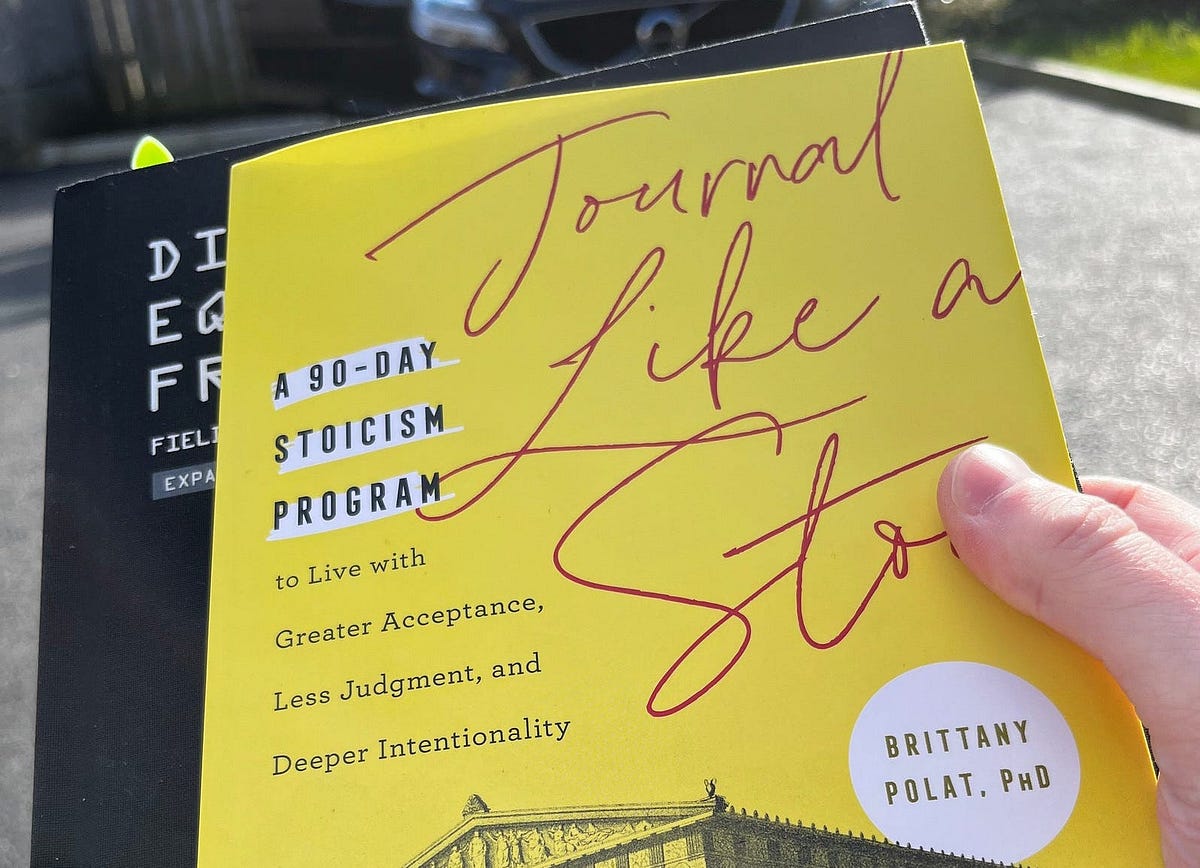
    ​Book of the Month: Journal Like a Stoic by Brittany Polat

    Picture


    ​Personal Growth Resources:

    Picture
    Use this in-depth questionnaire to learn more about your faults and subconscious motivations.


    Understanding and Applying Stoic Ethics In Modern Life:

    Picture


    ​Follow Common Sense Ethics on Pinterest:

    Picture


    ​Join the Stoic Parents Facebook Group:

    Picture
Powered by Create your own unique website with customizable templates.